
Il tuo edificio: come immaginato e As-Built
Quando guardiamo lo skyline di New York di oggi, siamo accolti da un mare di strutture splendidamente realizzate in ogni direzione. È facile ammirare, ma difficile immaginare come William Van Alen, architetto del Chrysler Building, debba averlo visto all'inizio del 20° secolo. Non come una città finita, ma come una tela di possibilità, dove l'immaginazione e l'audacia potevano modellare qualcosa di senza tempo.
Oggi, la maggior parte di noi non parte da tele vuote. Lavoriamo in spazi stratificati di storia, peculiarità e sfide nascoste. Eppure, lo stesso desiderio di rispettare ciò che è già presente, di comprenderlo appieno e di aggiungere il nostro tocco ponderato, accende in noi una spinta.
La tecnologia si è evoluta da quando Alen ha preso carta e penna, ma è sempre stata uno strumento per supportare le visioni individuali e dare vita al design. Questo articolo esplora l'approccio moderno di FARO alla tecnologia e come essa influisce sulla documentazione as-built.
L'approssimazione ha un costo. Il tuo budget lo dimostra.
Se hai mai guardato programmi televisivi di ristrutturazione di grandi progetti o fai da te, avrai familiarità con il tema degli errori di budget. Anche se il dramma di quei programmi potrebbe essere esagerato a fini di intrattenimento, mentre guardiamo i costruttori affannarsi per portare a termine un progetto, non sono del tutto infondati.
Gli studi hanno prodotto risultati variabili, a seconda del tempo, della regione e delle entità che li hanno condotti. Tuttavia, un tema ricorrente e un consenso generale indicano che i budget sono spesso influenzati da una pianificazione scadente o da costi imprevisti. Quando le ipotesi sostituiscono le condizioni verificate, i progetti subiscono sforamenti di budget, ritardi o sforzi sprecati.
Perché è importante una documentazione As-Built accurata?
Gli edifici destinati alla ristrutturazione o alla ricostruzione spesso non dispongono di planimetrie originali o la loro documentazione è obsoleta. Quando non riusciamo a gestire l'assenza di dati completi, rischiamo di incorrere in rilavorazioni. Queste rilavorazioni possono rappresentare <a href="https://trid.trb.org/View/884832" target="_" blank""="">fino al 5% dei costi totali di costruzione. Ridurre o eliminare questo 5% può avere un impatto significativo sia sulla pianificazione che sul budget dei progetti, indipendentemente dalla loro dimensione. Sebbene l'investimento in tecnologia moderna possa sembrare elevato, il costo delle rilavorazioni nel tempo è ancora più alto.
Utilizzo del Processo di scansione laser 3D per rilievi as-built affidabili
I Laser Scanner commerciali esistono dagli anni '90 e, da allora, si sono evoluti e innovati per soddisfare le esigenze di diverse industrie. Ancora oggi, aziende di tutto il mondo innovano e, come tutte le buone idee, si evolvono dalla concezione originale per creare qualcosa di migliore.
Qualsiasi tipo di soluzione di Processo di scansione laser 3D tu scelga, tutte producono un risultato simile, con diversi gradi di precisione, qualità e velocità. Forniscono un modo per visualizzare il mondo esistente all'interno di un ambiente digitale, e i risultati di tali dati sono lasciati interamente all'immaginazione umana.
La verità dietro ogni muro.
Naturalmente, un modo in cui i dati 3D vengono utilizzati è attraverso l'acquisizione e la rappresentazione degli edifici esistenti. Oppure, più semplicemente, per creare disegni as-built accurati. I disegni As-built non sono un concetto nuovo; esistono da quando abbiamo avuto cura di documentare i nostri sforzi di costruzione, ma in passato sono stati laboriosi. Documentare gli edifici esistenti rispetto a quanto progettato non è facile quando ti affidi a processi manuali e soggettivi.
Integrare la scansione 3D nel tuo flusso di lavoro
L'era in cui i geometri si muovevano negli edifici con metri a nastro e blocchetti per appunti sta tramontando per alcuni professionisti. Iperbole a parte, un Laser Scanner 3D può muoversi rapidamente negli spazi, acquisendo milioni di punti dati in poche ore. Questa tecnologia crea un modello digitale preciso dello spazio fisico, consentendo valutazioni obiettive.
Come tutte le moderne tecnologie, queste innovazioni sembravano un investimento costoso, mentre il mercato si adattava al nuovo standard. Fortunatamente, nel tempo, gli investimenti sono diventati più accessibili, favorendo un'adozione più ampia e benefit significativi per molte imprese di costruzione. Inoltre, non è solo l'hardware ad essere progredito. Il software, specialmente gli strumenti di elaborazione e collaborazione basati su cloud, si è espanso notevolmente, avvicinando il nostro mondo sempre più globale.
Collabora meglio con dati As-Built basati su cloud.
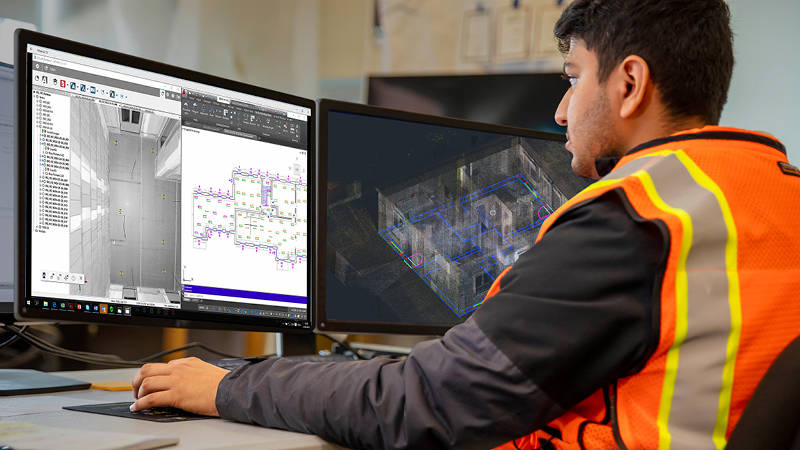
Anche se mi piace immaginare un luogo etereo nel cielo dove tutti i nostri dati sono archiviati, non abbiamo ancora raggiunto quel livello di progresso umano. Invece, ci affidiamo al "cloud". Una serie di server ronzanti ospita silenziosamente ogni scansione, modello e dettaglio. Anche se questo può apparire più ordinario, il risultato è piuttosto entusiasmante — la connessione.
Invece di operare in modo isolato, una singola scansione può ora essere trasformata in un modello condiviso che è aggiornato in tempo reale, accurato e accessibile a chiunque disponga delle autorizzazioni, in tempo reale e ovunque. Gli architetti possono vedere ciò che vedono gli appaltatori. Gli ingegneri possono vedere ciò che vedono i topografi. Non esistono più versioni, solo un'unica fonte di verità sempre aggiornata che mantiene tutti allineati.
Con l'adozione del cloud, le decisioni vengono prese più velocemente e la collaborazione è fluida. Per la prima volta, l'intero team collabora con la stessa comprensione.
Gli strumenti per ridurre le rilavorazioni
Ogni grande progetto inizia con la chiarezza, ottenibile con gli strumenti giusti. Un scanner laser terrestre (TLS), come la gamma FARO® Focus, acquisisce ogni dettaglio con precisione millimetrica, fornendo una solida base di verità. I laser scanner mobili, come il FARO® Orbis™ Premium, navigano in corridoi stretti e spazi complessi, rilevando dettagli che altri potrebbero trascurare. I laser scanner di imaging, come il FARO Blink™, forniscono immagini di alta qualità insieme a dati 3D, offrendo a costi contenuti un contesto più ampio.
Tutte queste informazioni vengono quindi caricate sul cloud, che chiamiamo Sphere XG. Qui, l'elaborazione trasforma i dati in insight, facilitando una collaborazione che unifica i team.
In FARO, siamo giunti a un punto in cui la nostra spinta a innovare ulteriormente e più velocemente rende le possibilità future ancora più entusiasmanti. Tuttavia, non si tratta solo della grande tecnologia che creiamo. è un modo per vedere, condividere e costruire con piena fiducia.
Vedi prima, Costruisci velocemente
Van Alen aveva una matita e una visione, e il Chrysler Building si erge maestoso da allora. Veglia silenziosamente su una città che si è trasformata, su generazioni che si sono succedute, su turisti che si fermano in ammirazione, su tempeste che hanno messo alla prova il suo acciaio e sul lento scorrere del tempo stesso. Rimane una costante in una città caotica, una testimonianza di cura, lungimiranza e design duraturo.
Oggi abbiamo i Laser Scanner, i digital twin e la collaborazione cloud, ma l'obiettivo rimane lo stesso. Vedere chiaramente, costruire con cura e creare un lavoro duraturo. La tecnologia ci offre precisione, la visione ci dà un significato. Insieme, ci consentono di valorizzare ciò che esiste plasmando ciò che verrà.
Se ti è piaciuto questo articolo, considera di leggere una delle nostre storie di successo dei clienti, che mostra come la nostra tecnologia abbia potenziato la visione e l'ambizione dei loro clienti.