
Modern facilities are swimming in data. Sensors log equipment performance around the clock; maintenance teams record thousands of works orders each year, and engineers collect spatial measurements, inspection reports, and project documentation that span decades. Yet for many organizations, this abundance of information creates a paradox: more data, but not necessarily better decisions.
The shift toward data-driven operations is no longer a future ambition. Today, it’s an active transition happening across industrial and commercial facilities, with technologies like digital reality capture and integrated data platforms helping facility teams make informed, evidence-based decisions from captured data.
How Does Data-Driven Decision-Making Improve Modern Facilities?
Industrial environments are growing more complex, not less. Aging infrastructure, tightening regulatory requirements, and the pressure to do more with lean teams have raised the stakes for every operational decision. A missed maintenance window can cascade into unplanned downtime. An inaccurate as-built drawing can derail a capital project. A gap in safety documentation can expose workers to preventable hazards.
According to Gartner research from 2020, organizations lose an average of $12.9 million annually due to “poor data quality”, a figure that reflects rework, missed opportunities, and operational inefficiencies that compound over time.
When facilities have access to accurate and connected data, they reduce uncertainty. Teams can act with confidence, identify problems before they become failures, and align across departments on a single version of the truth.
Turning Reality Capture Data into Actionable Insight
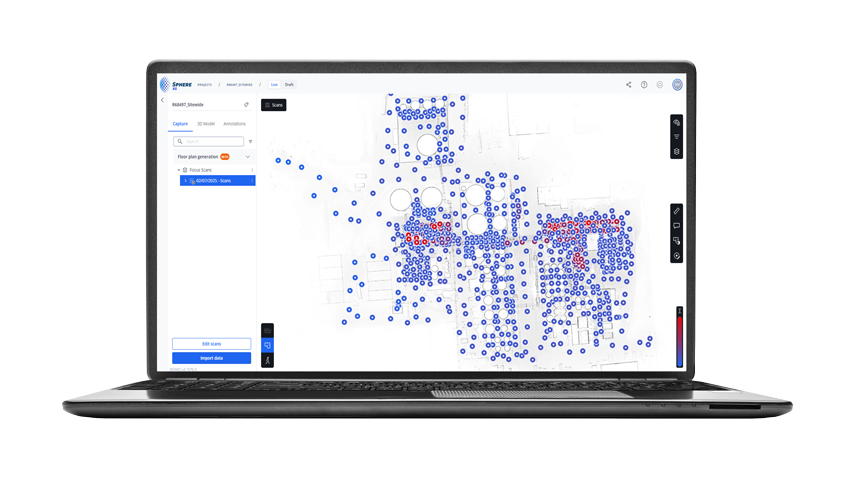
Reality capture refers to the process of digitally mapping the physical environment, with tools like laser scanners and 360° cameras, to create an accurate 3D representation of the real world. Laser scanners capture detailed point clouds, a collection of spatial points densely packed to generate a 3D representation of what has been scanned. 360° photography complements this with immersive, photorealistic images of the same spaces, giving teams the ability to navigate an environment as though they were there in person.
The result? An accurate, up-to-date digital model that facility teams can access, analyze, and share without setting foot on-site. This has significant practical implications:
- Reduced site visits: Engineers and planners can conduct virtual walkthroughs with 360° photos and take measurements remotely, reducing the time, cost, and safety exposure associated with repeated physical access. This mitigates safety concerns and leads to faster decision making.
- Improved planning and coordination: Designs can be validated against real conditions before construction begins, catching clashes and conflicts early when they’re easier to fix. Fewer downstream changes reduce the risk of cost overruns.
- A shared reference point: All teams, from operations, engineering, safety, to project management, work from the same spatial dataset with 3D point clouds and 360° photos, eliminating inconsistencies caused by fragmented or outdated information. With everyone working on the same page, you get less coordinated errors and rework.
How Are Facilities Using Data to Improve Daily Operations?
The value of good data shows up in day-to-day decisions across four core areas:
- Maintenance planning: Accurate asset data enables teams to anticipate failures rather than react to them. When maintenance crews can see the real condition and configuration of equipment via 360° imagery and point cloud measurements, they schedule interventions at the right time, extending asset life and preventing costly unplanned downtime.
- Asset tracking and documentation: Facilities managing large or complex inventories of equipment, from oil and gas operators tracking valve configurations to insurers documenting the condition and location of assets following a loss, rely on reality capture to create verified, time-stamped records. 360° photos can provide an intuitive visual record to assist with review.
- Project planning: Capital projects succeed or fail based on the quality of pre-construction information. When engineering teams can validate designs against accurate as-built data, scope changes and costly rework decrease significantly.
- Collaboration: Data silos are one of the most persistent operational challenges in large facilities. A shared digital dataset brings operations, maintenance, and engineering teams into alignment, reducing duplication of effort and improving cross-functional coordination.
- Safety: Less personnel need to enter confined spaces, process hazard areas, or aging structures. Digital models and 360° walkthroughs allow them to assess and plan remotely. Identifying risks in a virtual environment is preferable to discovering them on-site.
Succeeding With Stronger Insights
Modern facilities don’t succeed by collecting more data. They succeed by turning data into insight.
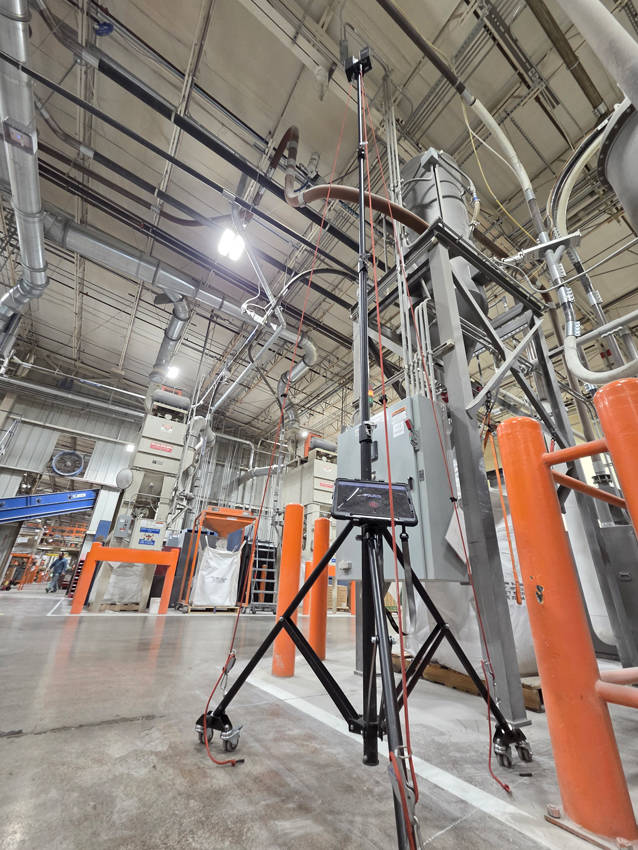
Reality capture technology combining laser scanning and 360° photography is one of the most powerful enablers of that shift. By creating precise, up-to-date digital representations of physical facilities, it gives operations and engineering teams the foundation they need to make confident decisions, from daily maintenance calls to long-term capital strategy.
Whether the goal is accelerating a retail rollout, keeping an oil and gas facility running safely, strengthening an insurance claim with verifiable site documentation, or maintaining a complete and current picture of critical assets, the facilities that will outperform over the next decade are the ones investing now in building that data foundation. The question is not whether to make the shift. It’s how quick.